No one born in sixty years, either. She had missed that in the archive entry because there was no column for it.
The wind pressed against the tithe-house door. The latch rattled once, like a question.
Shreya looked at the blank page at the back of the ledger. She looked at the pen beside the inkwell, which was full — freshly filled, she realized, which meant someone had prepared this. Someone had left the door open, the book open, the pen ready.
They had let her in because they needed someone who didn’t belong here.
Someone whose name was not already owed.
For a long moment she sat with the weight of that. The cold coming through the door’s gap. The faint sound, now, of something moving on the hillside — not footsteps, exactly, but a slow and patient displacement of earth, the way a sleeper shifts before waking.
She thought about the woman with the sheet. The held breath of the whole village. Forty people who had not died in sixty years and had not brought a child into the world in sixty years, because every name they could give was already given, already held.
She picked up the pen.
She did not write her name.
She wrote the name from the ledger — the one that appeared in the oldest pages, crossed out and rewritten and crossed out again, the name the elder had spoken aloud and paid for. The name that no one in the village had dared use since. She had no tongue to lose. She had no loves catalogued in her that this thing could reach back through generations to find. She was a stranger with a satchel and a habit of going where she shouldn’t, and that, she decided, was a kind of armor.
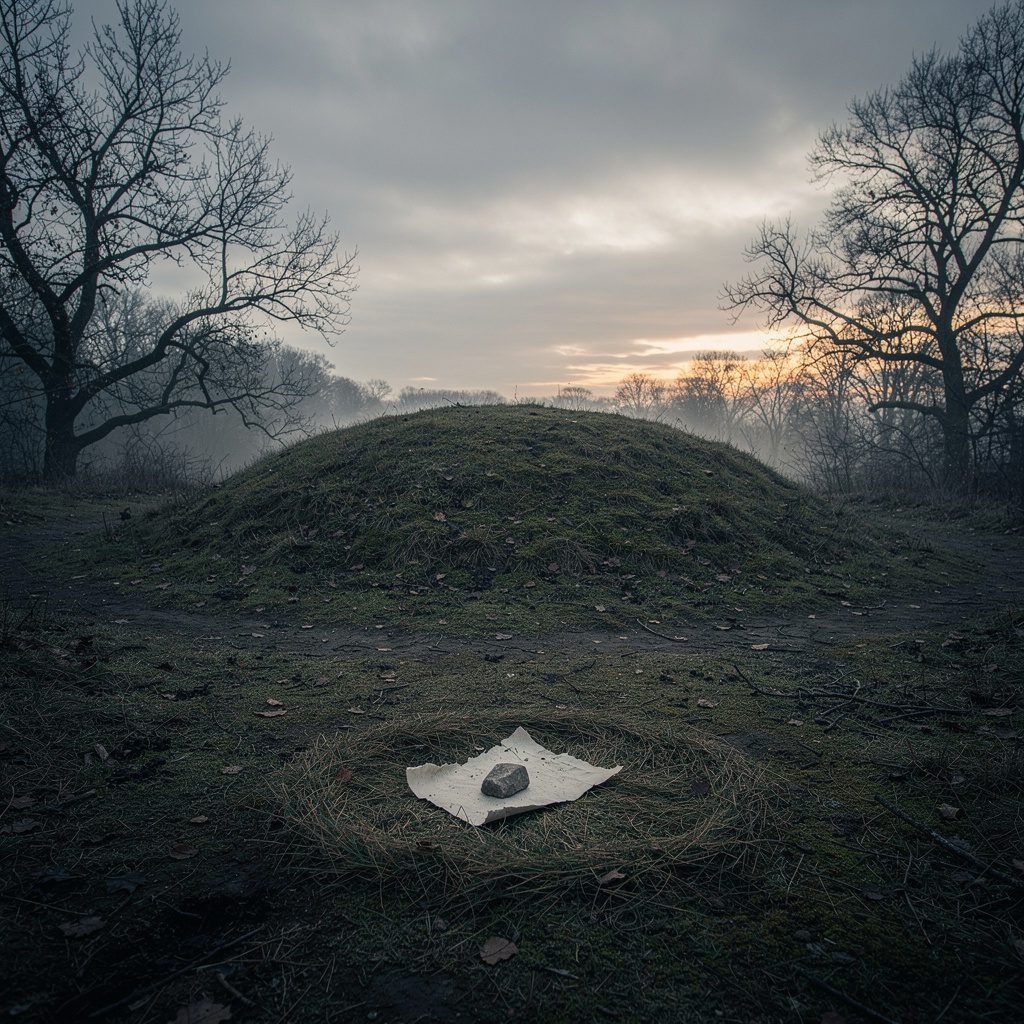
She tore the page out. She walked to the barrow hill in the last grey light. She placed the paper at its base, weighted with a stone.
The wind stopped.
The sound of shifting earth stopped.
The cold remained — it would always remain, she thought, in a place like this — but it was only weather now. Only autumn. Only the ordinary dark coming in the ordinary way.
Shreya walked back through the village. Every door was still closed. She didn’t knock again. She picked up her satchel from the tithe-house step and she walked until the cobblestones ended and the road began, and she followed the road until the hill was out of sight.
She did not feel heroic. She felt hollowed out and very tired and aware, in a way she hadn’t been before, of how much she relied on being known — on existing in the memory of other people — and of what it might cost to have that taken.
Her name was still hers. She had checked, quietly, on the walk back. She still knew every person she had ever loved.
But she noticed, as she walked, that she could not quite remember the name she had written.
She told herself that was fine. She told herself that was a fair price.
She didn’t stop walking to decide if she believed it.

 WhatsApp
 Telegram
 Email






Categories
- AI & Technology
- Contemporary
- Corporate Control
- Creepypasta
- Crime Thriller
- Cyberpunk
- Dark Fantasy
- Enemies to Lovers
- Fairy Tale Retelling
- Fantasy
- First Contact
- Forbidden
- Genetic/Body Horror
- High Fantasy
- Monster Hunter
- Mythic/Folklore
- Paranormal
- Portal/Otherworld
- Post-Apo
- Post-Collapse Society
- Psychological Thriller
- Romances
- SCI-FI
- Second Chance
- Slow Burn
- Space Combat
- Spacepunk
- Surveillance State
- Survival Thriller
- Thrillers
- Time Travel
- Treasure Hunter
- Urban Fantasy
- Witchcraft/Curses
Tags
10min stories atmospheric atmospheric fantasy atmospheric fiction contemporary romance Creepy creepypasta crime thriller dark fantasy debt dystopia emotional fiction enemies to lovers ensemble cast epistolary fantasy female protagonist first person forbidden romance framed narrative high fantasy love story magic Memory mystery Paranormal psychological horror psychological thriller romance sci-fi second chance second chance romance short fiction short story slow burn space station speculative fiction supernatural Survival survival thriller suspense thriller travel romance witchcraft workplace romance
Leave a Reply