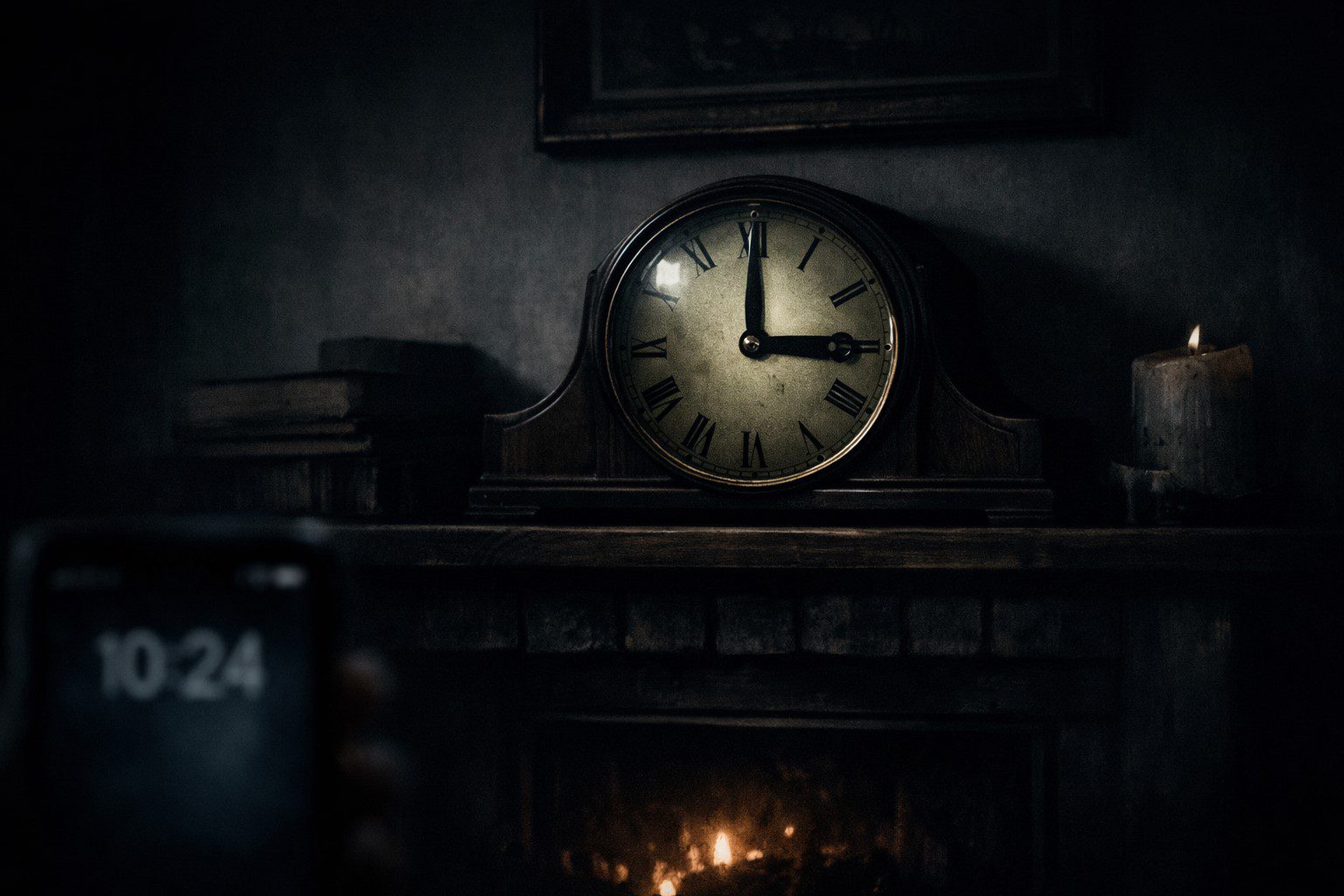
My grandmother’s clock stopped the moment she died, which I assumed was coincidence until it started stopping again — always at the same time, always for exactly three minutes, always at the moment I was about to make a decision I would later regret.
The first time, I assumed the battery was dying. The second time, I changed the battery. The third time, I began to pay attention.
My name is Petra Vell. I was thirty-one, I managed a small bookshop, and I had inherited the clock from my grandmother’s flat the previous December. It was a mantel clock, dark wood, brass face, the kind of object that looked like it had always been in the same room and would outlast everyone who thought they owned it. My grandmother had kept it on the shelf above the fireplace for forty years. I put it on the shelf in my sitting room and for two months it ran without incident.
In February I almost accepted a job I would have hated. I was on the phone with the recruiter, about to say yes, when I noticed the clock had stopped. I did not notice it consciously — something made me glance at it, the way you glance at a movement in your peripheral vision. The hands were still. I checked my phone for the time. Three minutes later I looked again, and the clock was running.
I said I needed more time to decide. I did not take the job.
I did not connect the clock to the decision for another two months.
In April I was about to transfer a significant amount of money to a property investment scheme that a friend had enthusiastically recommended. I had done enough research to feel confident and not enough to be cautious. I was sitting at my laptop with the transfer form open when the clock stopped.
I glanced at it the way I had in February. Three minutes. When it started again I closed the transfer form, not for any articulate reason but because something had interrupted the momentum of the decision and in the interruption I had noticed a thread I hadn’t pulled. I pulled it. The investment scheme collapsed six weeks later, taking with it the savings of several of my friend’s friends.
That was when I went back and thought about February.
I told my friend Mara, who was the kind of person you told things to because she did not immediately find a rational explanation and then retreat into it. She sat at my kitchen table and looked at the clock for a while.
“Does it stop at other times?” she asked.
“Not that I’ve noticed.”
“And you can’t feel it coming? No warning?”
“The warning is the stop,” I said. “By the time I notice the clock it’s already three minutes into the pause.”
She looked at the clock for another moment. “Your grandmother,” she said. “Was she — protective?”
I thought about that. My grandmother had been precise and attentive and had a quality of noticing things before they became problems. She had a phrase she used when I was young: wait before you move. She used it in card games and in conversations about decisions I was about to make, and it had irritated me when I was young in the way of advice that makes its meaning clear only later.
“Yes,” I said. “She was protective.”

 WhatsApp
 Telegram
 Email







Leave a Reply