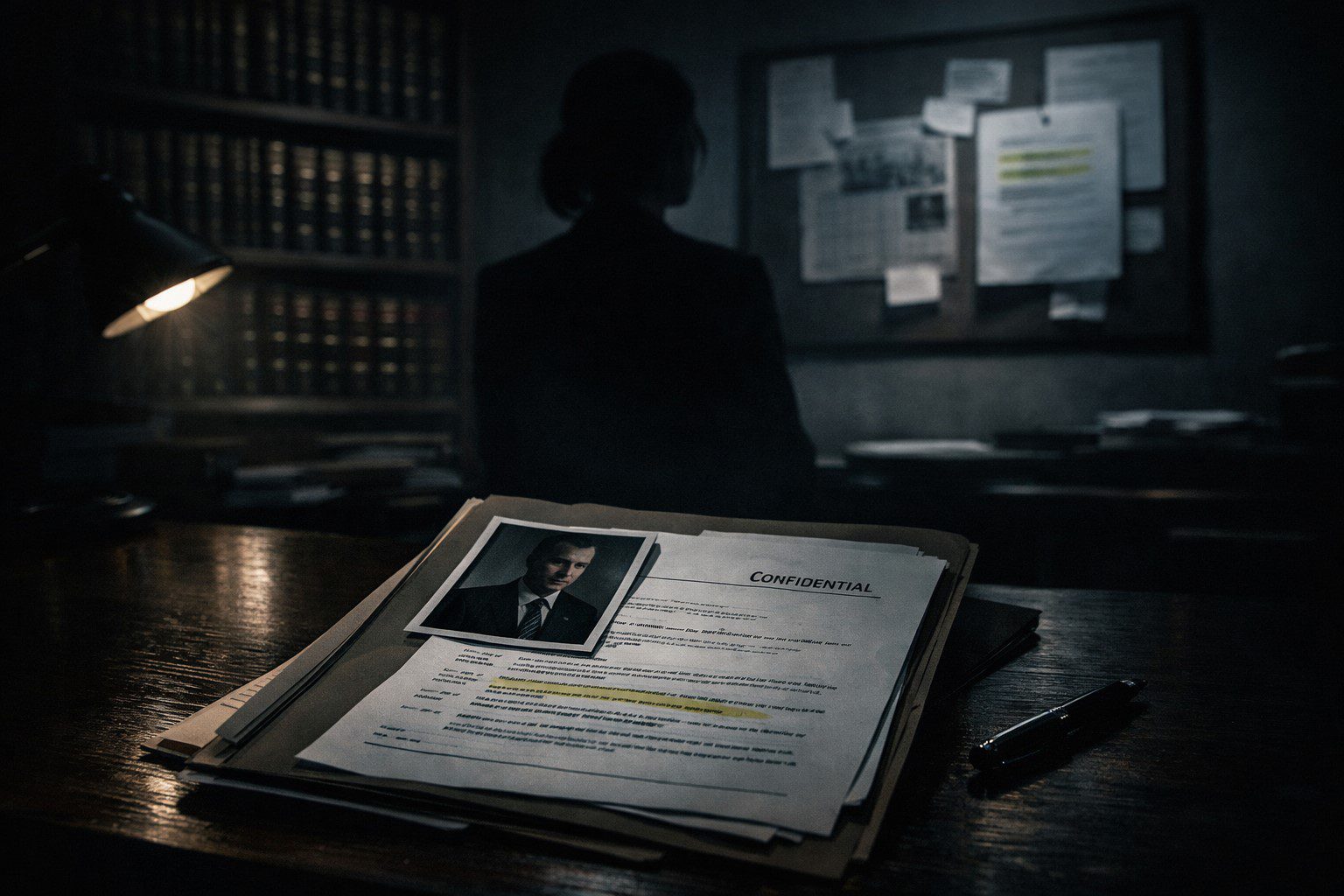
The brief landed on my desk at eight forty-seven on a Monday morning with a note from the senior partner: urgent, new client, court date in four days. I had defended difficult cases in twelve years at the bar, but this was the first time I had opened a file and recognised the defendant’s photograph as someone I had met before.
The man in the photograph had given me a different name when we spoke at a conference eight months ago. He had been charming and well-dressed and had asked me very specific questions about the strength of alibi evidence in fraud cases. I had answered them because I thought he was an academic. I had been thorough.
My name is Viv Crane. I was a criminal defence barrister at a mid-sized chambers in the city, which meant I defended people the prosecution had decided to charge, regardless of what I thought they had done. That was the job. Twelve years of it had given me a working relationship with the discomfort of not knowing and a professional commitment to ensuring the process was fair regardless of the outcome.
The file in front of me was for a man named Marcus Fell. He was charged with a sophisticated financial fraud — structured transfers, shell companies, the deliberate obscuring of funds across multiple jurisdictions over three years. The kind of case that took eighteen months to investigate and another six months to prosecute, with documentation that could paper a small room. I had worked these cases before.
What I had not done before was read the prosecution’s disclosure and find, buried in an exhibit, a transcript of a conversation I had had at an academic conference in March of the previous year. The transcript was accurate. The questions about alibi evidence were there, and so were my answers.
And so was my name.
I put the file down and looked at the wall of my office for approximately ninety seconds. Then I picked it up again and read the transcript through three times.
It was not illegal for a barrister to have spoken to a defendant before representation was established. It was not even unusual in some circumstances — small professional worlds overlapped in ways that sometimes produced prior contact. What mattered was whether the prior contact created a conflict of interest that prevented fair representation, or whether anything said in the prior contact could compromise the case.
I had given Marcus Fell a thirty-minute seminar on the weaknesses of alibi evidence. He had then deployed a very specific alibi strategy in the months following our conversation. The prosecution had transcribed our conversation and included it in their disclosure as evidence of premeditation.
My professional advice, given freely at a conference to a man I thought was a stranger, was now part of the prosecution case against my client.
I needed to speak to the senior partner before I did anything else.
Gerald was the kind of senior partner who had seen most things and who received difficult news with the same measured gravity he used for everything else. He read the transcript and the exhibit reference and did not say anything for a long time.
“You had no idea who he was when you spoke to him,” he said. It was not a question.
“None. He introduced himself as a researcher. I have no memory of the name Marcus Fell from that conversation.”
“What name did he use?”
I had been trying to remember since I opened the file. “I’m not certain. Something unremarkable. I spoke to forty or fifty people at that conference.”
Gerald looked at the transcript again. “He was specific in his questions.”

 WhatsApp
 Telegram
 Email






Leave a Reply