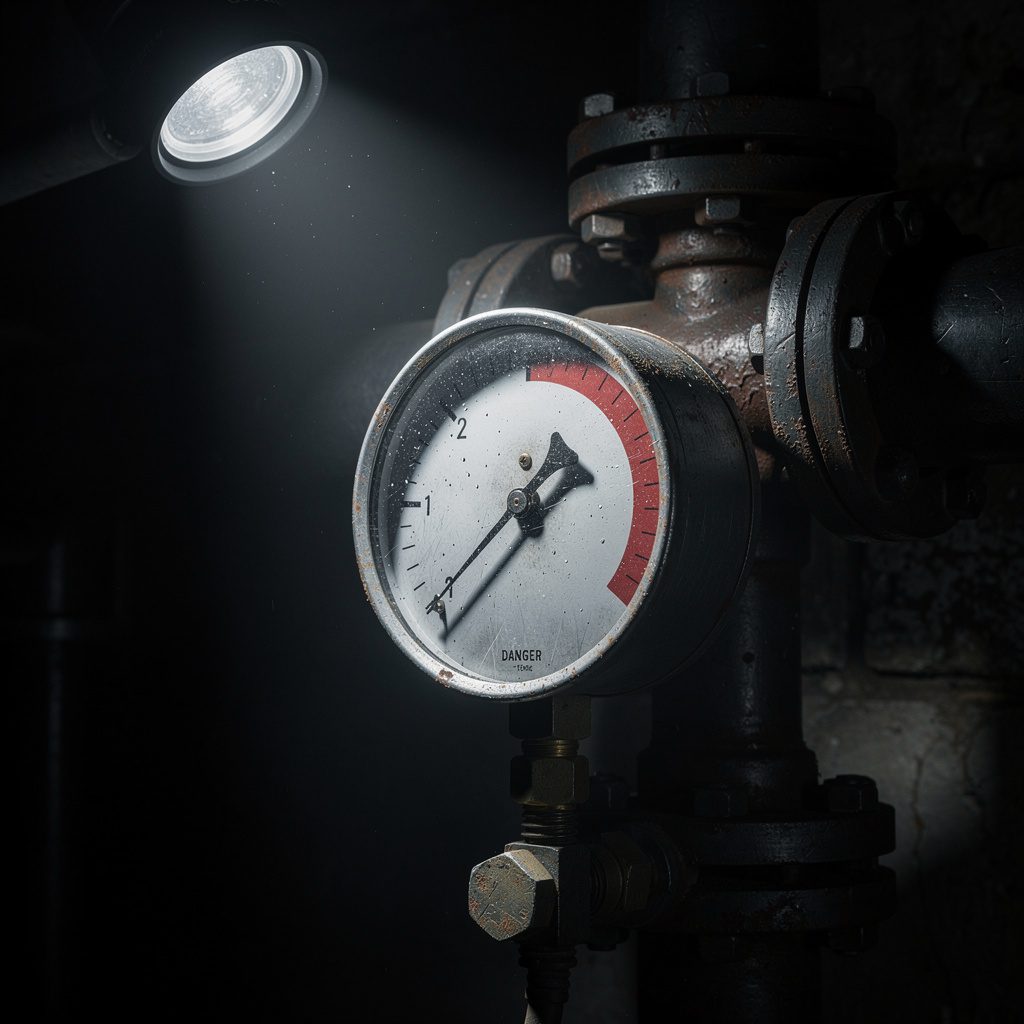
I should tell you upfront: I was there. Not physically — I was never physically anywhere near that control room. But I was present in the way that matters, the way a voice on a recording is still present even after the mouth that made it is long gone. My name doesn’t matter yet. What matters is Naveen.
“You already sent it,” the voice said.
Naveen Sethi looked at his phone. The screen showed the draft folder. The message — three lines, addressed to his shift supervisor at the Harrow Basin fuel depot outside Edmonton — was still sitting there, unsent. Cursor blinking at the end of the last word like a patient animal.
“I didn’t,” he said.
He was alone in the depot’s monitoring room. Forty minutes past midnight. The room smelled the way it always smelled on night shift: burnt coffee, machine oil, the faint chemical sweetness of processed petroleum wafting up through the ventilation grates. The fluorescent strip above his workstation had been flickering since October. Nobody had replaced it. Nobody ever replaced anything at Harrow Basin until something broke badly enough to require a report.
“Check your sent folder, Naveen.”
The voice was coming from his headset. He’d had it on for an equipment check at midnight — a routine radio sweep across the three active monitoring stations — and then the sweep had ended and he’d meant to take the headset off, but he hadn’t, because the voice had started speaking.
He checked his sent folder.
The message was there.
Timestamp: 00:17.
He looked at the clock on the wall. 00:17 was — he counted — four minutes from now.
He put the phone down on the desk very carefully, the way you put down something that might shatter.
—
Let me tell you what the message said, because Naveen didn’t fully process it in that moment. His eyes moved over the words but his brain filed them sideways, the way the brain sometimes does when information arrives in a shape it isn’t ready for.
The message read: *Valve cluster 7 is going to fail tonight. I’ve been trying to tell you for three weeks. You should not be in that building.*
Three lines. His own phrasing. His own habit of writing in short declarative sentences, the way his engineering instructor at the Chandigarh technical college had drilled into him — *say what you mean, then stop*.
He had been composing it, mentally, for three weeks. He hadn’t sent it because sending it meant committing to something: a confrontation, an investigation, the particular loneliness of being the person who raised an alarm that everyone else found inconvenient.
But it was in his sent folder.
Timestamped four minutes in the future.
“How are you doing this?” he asked the headset.
The voice didn’t answer that. Instead it said, “Go check valve cluster 7.”
And here is the thing about Naveen Sethi that I want you to understand before he makes his next decision: he was not an excitable person. He was thirty-one years old, methodical, someone who had worked night shifts in three different industrial facilities over nine years and had learned that industrial facilities at night are full of sounds and signals that seem alarming until you understand them. He had a particular gift for staying calm in the presence of the unfamiliar. It was why he’d been put on nights.
So he didn’t go check valve cluster 7 right away. He sat very still and thought it through.
—
The monitoring room was a rectangle. One door in, same door out. Four workstations, only one of which was active during night shift — his. The screens showed pressure readouts, temperature lines, flow rates across the depot’s three active pipeline clusters. The readouts for cluster 7 were nominal. Green across the board. The numbers sat there breathing steadily, the way numbers do when nothing is wrong.
“The sensors on cluster 7 have been misreporting for six weeks,” the voice said.
“Who are you?”
“You know who I am.”
He didn’t, or he thought he didn’t, which is not quite the same thing.
“I’m going to take this headset off,” he said, “and I’m going to call the duty supervisor and report a possible fault at cluster 7 and we’ll go from there.”
“You’ve said that to yourself seventeen times in the last three weeks. You didn’t do it any of those times either.”

 WhatsApp
 Telegram
 Email







Categories
- AI & Technology
- Contemporary
- Corporate Control
- Creepypasta
- Crime Thriller
- Cyberpunk
- Dark Fantasy
- Enemies to Lovers
- Fairy Tale Retelling
- Fantasy
- First Contact
- Forbidden
- Genetic/Body Horror
- High Fantasy
- Monster Hunter
- Mythic/Folklore
- Paranormal
- Portal/Otherworld
- Post-Apo
- Post-Collapse Society
- Psychological Thriller
- Romances
- SCI-FI
- Second Chance
- Slow Burn
- Space Combat
- Spacepunk
- Surveillance State
- Survival Thriller
- Thrillers
- Time Travel
- Treasure Hunter
- Urban Fantasy
- Witchcraft/Curses
Tags
10min stories atmospheric atmospheric fantasy atmospheric fiction contemporary romance Creepy creepypasta crime thriller dark fantasy debt dystopia emotional fiction enemies to lovers ensemble cast epistolary fantasy female protagonist first person forbidden romance framed narrative high fantasy love story magic Memory mystery Paranormal psychological horror psychological thriller romance sci-fi second chance second chance romance short fiction short story slow burn space station speculative fiction supernatural Survival survival thriller suspense thriller travel romance witchcraft workplace romance
Leave a Reply