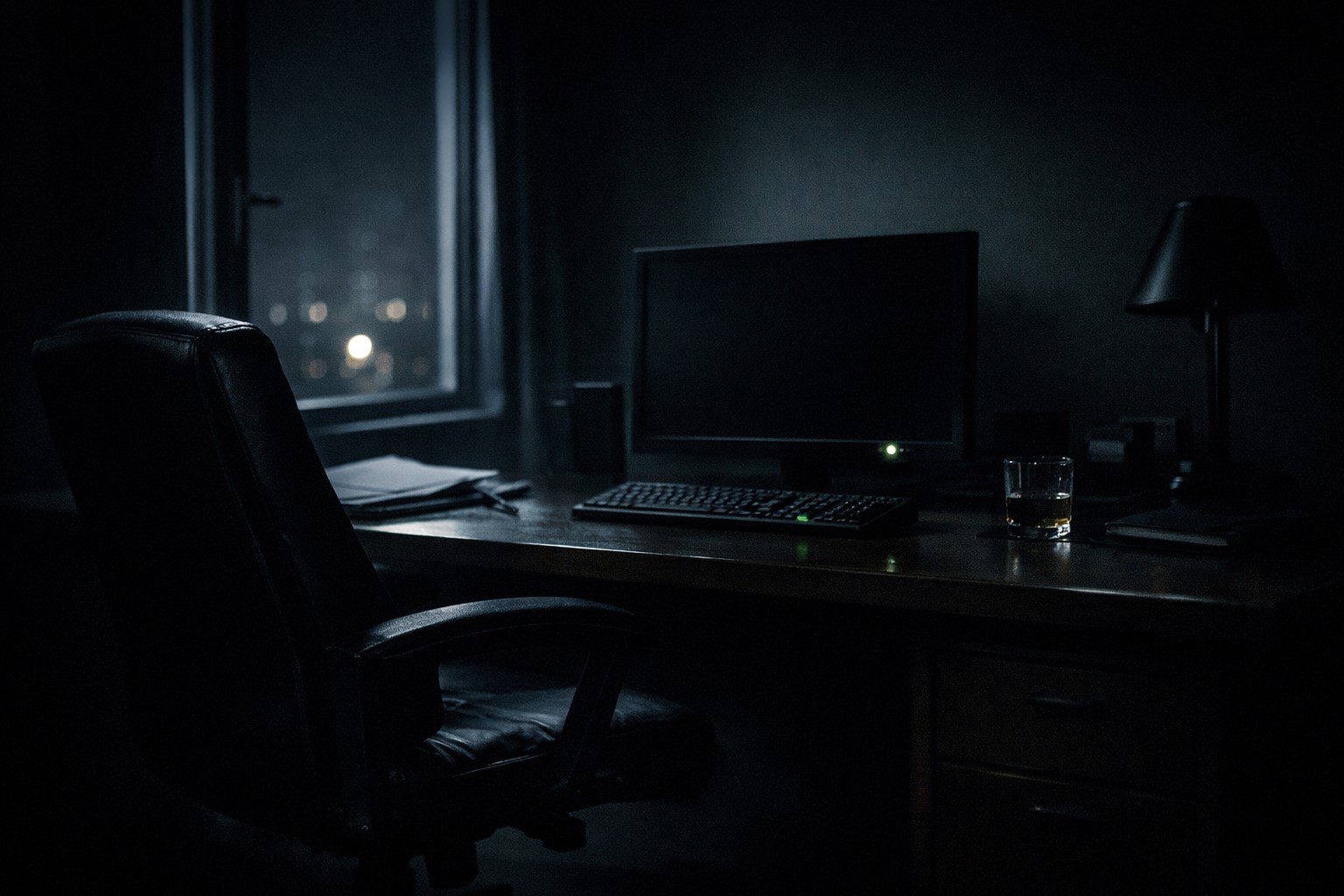
The alibi was perfect. That was the problem. In twenty-two years of homicide work, Detective Sera Voss had learned one thing about perfect alibis: they were never accidents.
Victor Crane had been at a charity fundraiser across the city when his business partner died. Forty witnesses. A speech on record. A photograph with the mayor timestamped at nine forty-seven, which was eleven minutes after the coroner placed Thomas Aldric’s death. Crane had smiled when she showed him the photograph and said, gently, that he hoped that would be the end of it.
It was not the end of it.
Thomas Aldric had been found in the private office of the firm he and Crane co-owned, slumped at his desk, a cardiac event according to the first paramedic on scene. He was fifty-three, he had a history, he had been working late. The circumstances were unremarkable enough that a less attentive responding officer might have filed it as natural and moved on.
The responding officer had been Detective Sera Voss, who was attentive by nature and suspicious by profession, and who had noticed three things before the paramedics took over.
First: the window was open three inches, on a January night at minus four degrees, in an office where the thermostat was set to twenty-two.
Second: Thomas Aldric’s computer screen was dark, but the keyboard indicator showed the caps lock had been toggled within the last four minutes — meaning the computer had been active, and then either shut down or put to sleep, very recently.
Third: the chair behind the desk was pushed back at an angle that suggested someone had stood up quickly from it. Not the posture of a man who had felt unwell and lowered himself carefully. The posture of a man who had stood up fast when something surprised him.
She had flagged the case for review. Her captain had looked at the circumstances and looked at the alibi and told her to be thorough but to be realistic. She intended to be both.
The autopsy came back clean. No toxicological finding outside the expected range, no physical injury, no indication of anything other than cardiac failure in a man with a documented heart condition. Her captain forwarded the result with a single line: Natural causes confirmed. File and close.
Sera did not file and close.
She went back to the office. She stood in the room with the window and the chair and the keyboard indicator and she thought about what she knew about the gap between what science could measure and what had actually happened in a room. Science could tell her how a man had died. It could not always tell her why he was dead at that particular moment on that particular evening, or who had ensured that the conditions were right.
She requested the building’s access log for the previous forty-eight hours. The system ran on key fob entry — every door, every time, every fob ID. The log showed Thomas Aldric entering the building at six forty-one p.m. No one else had entered after six p.m. Victor Crane’s fob had last been used at three twenty p.m., when he had left the building ahead of the fundraiser.
She looked at the log for a long time. Then she requested the fob issuance records — every fob ever issued for the building, active and deactivated.
There were eleven fobs on record. Nine were active and accounted for — staff, cleaning company, building management. One had been deactivated eighteen months ago when a junior associate left the firm. One had been reported lost by Victor Crane two years earlier.

 WhatsApp
 Telegram
 Email







Leave a Reply