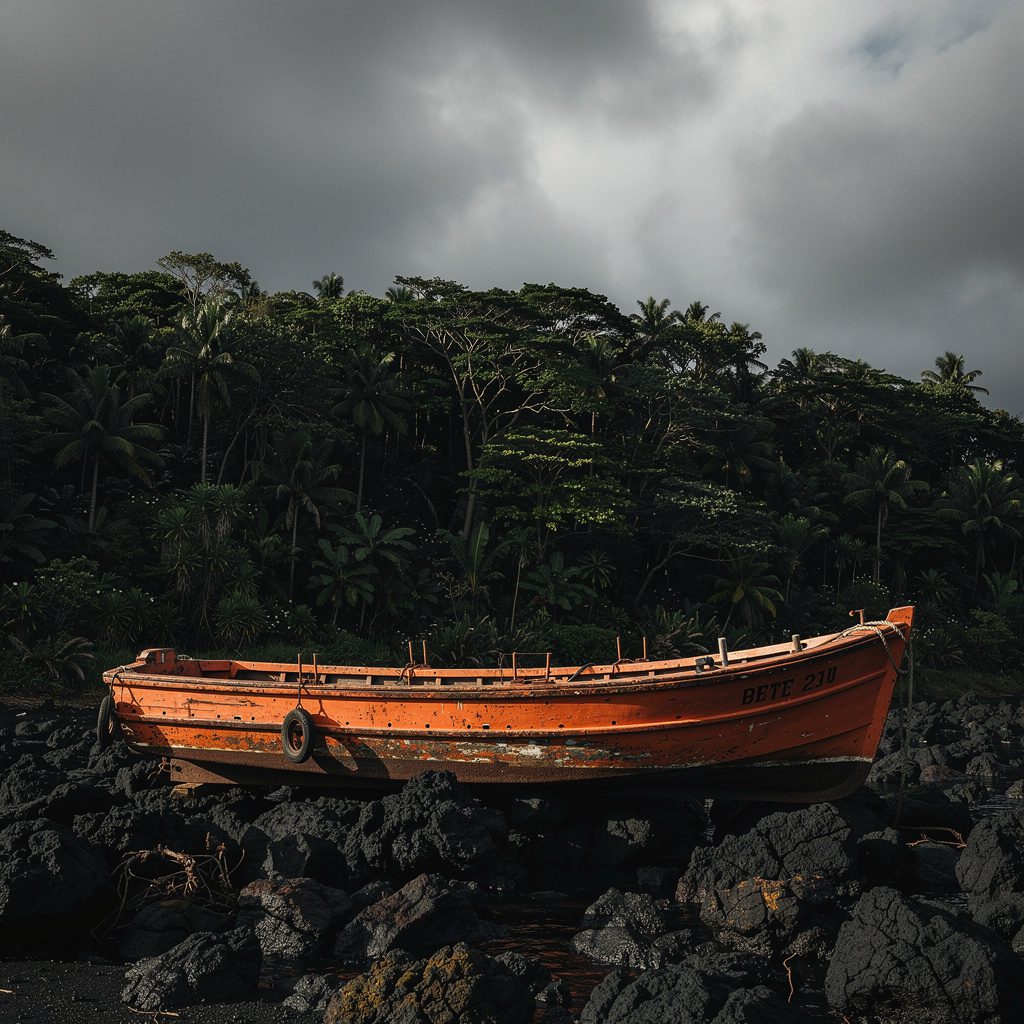
The lifeboat was ash. Mara had watched it burn herself — three days ago, on the open Pacific — and yet here it was, rocking gently against the island’s rocky shore.
She stood at the tree line, salt-crusted and hollow with hunger, staring at the orange hull as if her eyes were lying to her. Maybe they were. Dehydration did strange things to the mind. But the boat’s registration number, stenciled in black along the bow — K-7 MERIDIAN — was the same one she had memorized during the safety briefing on the research vessel. The same one she had clung to as the fire spread. The same one she had abandoned when the flames reached the fuel line.
Mara had been the only survivor. She was certain of that.
She forced herself to walk toward it, feet scraping over wet volcanic rock. The island had no name on any map she knew. It appeared on the emergency GPS as a gray smudge, a geographical afterthought between Hawaii and the Marshall Islands. She had washed ashore two days ago, half-conscious, her survival suit shredded at the shoulder. Since then, she had eaten rainwater from a tarp she’d fashioned from palm fronds and tried not to think about the others.
The lifeboat looked untouched. No scorch marks. No warped fiberglass. The emergency kit mounted inside the stern — the one she had ripped open for the flare gun before jumping — was sealed shut, its red latches gleaming like new.
Mara pressed her hand flat against the hull. Solid. Real. Warm from the sun.
She pulled her hand back as if burned.
The warmth was wrong. The boat was on the shaded side of the cove. It should have been cold.
She scanned the beach. Footprints in the black sand led from the waterline to the tree line, then back again. Not her footprints — hers were further up the shore, narrow and uneven from her injured ankle. These were wider, deeper, the stride of someone heavier.
Mara’s pulse spiked. She was not alone.
She crouched behind the bow and listened. The island answered with wind and the rhythmic knock of water against stone. Nothing else. She counted to thirty, the way her father had taught her when she was eight and afraid of the dark — slow, deliberate, let your heartbeat catch up with your logic.
Then she heard it. A low, repetitive sound from inside the jungle. Not an animal. Too metronomic. A tap, tap, tap — like someone working with a tool.
Every instinct told her to stay hidden. But instincts also told her that whoever had brought the boat here had resources she didn’t. Water. Food. A radio, maybe. Rescue.
She moved toward the sound.
The jungle was dense and humid, the canopy blocking the afternoon sun into thin green shafts. She moved slowly, testing each step before committing her weight, the way she had learned during a field research expedition in the Borneo rainforest six years ago. Back when her biggest concern was disturbing a nesting hornbill.
The tapping grew louder. She pushed through a curtain of broad leaves and stopped.
A man sat cross-legged in a small clearing, using a flat rock to drive a wooden stake into the ground. He was lean, deeply tanned, wearing a torn blue shirt that Mara recognized — it was the same uniform issued to the Meridian’s crew. He had his back to her. His hair was matted and long, longer than any of the crew she remembered.
She stepped on a dry twig. The crack was small but absolute.
The man went still.
“I heard you on the beach,” he said without turning. His voice was calm, almost bored. “You should have stayed by the boat.”
Mara’s throat tightened. “Who are you?”
He turned then, and she saw his face. Gaunt, sun-damaged, a scar along his jaw she didn’t recognize. But his eyes — pale gray, slightly asymmetric — she knew those eyes from the crew manifest photo she’d reviewed before departure.
Dennis Hale. The Meridian’s first engineer. The man who had been below deck when the fire started. The man she had assumed was dead.
“You made it,” she breathed.
“So did you,” he said. He didn’t smile. He set down his rock and stood slowly, brushing dirt from his knees. “How long have you been on the island?”
“Two days. You?”
He looked at the sky. “Longer.”

 WhatsApp
 Telegram
 Email






Categories
- AI & Technology
- Contemporary
- Corporate Control
- Creepypasta
- Crime Thriller
- Cyberpunk
- Dark Fantasy
- Enemies to Lovers
- Fairy Tale Retelling
- Fantasy
- First Contact
- Forbidden
- Genetic/Body Horror
- High Fantasy
- Monster Hunter
- Mythic/Folklore
- Paranormal
- Portal/Otherworld
- Post-Apo
- Post-Collapse Society
- Psychological Thriller
- Romances
- SCI-FI
- Second Chance
- Slow Burn
- Space Combat
- Spacepunk
- Surveillance State
- Survival Thriller
- Thrillers
- Time Travel
- Treasure Hunter
- Urban Fantasy
- Witchcraft/Curses
Tags
10min stories atmospheric atmospheric fantasy atmospheric fiction contemporary romance Creepy creepypasta crime thriller dark fantasy debt dystopia emotional fiction enemies to lovers ensemble cast epistolary fantasy female protagonist first person forbidden romance framed narrative high fantasy love story magic Memory mystery Paranormal psychological horror psychological thriller romance sci-fi second chance second chance romance short fiction short story slow burn space station speculative fiction supernatural Survival survival thriller suspense thriller travel romance witchcraft workplace romance
Leave a Reply