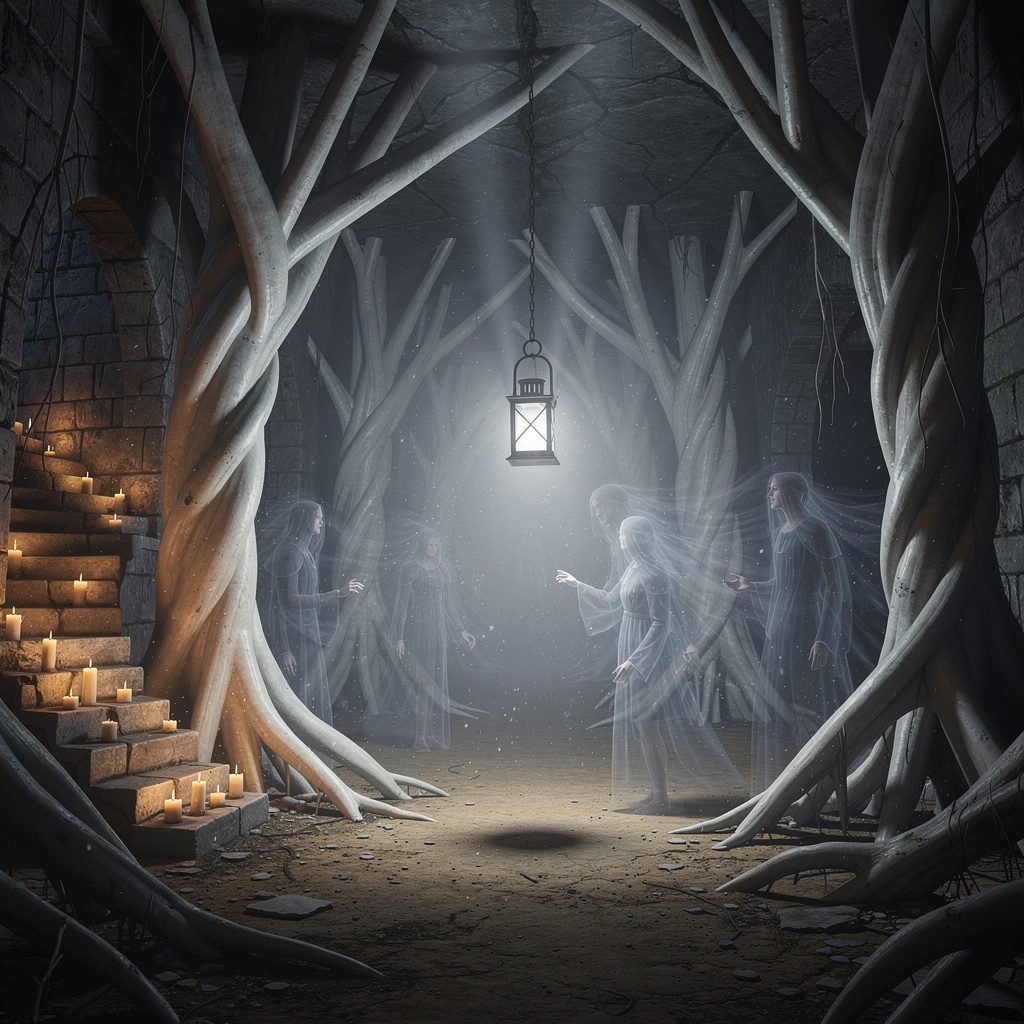
I am telling you this now because someone should know how it ended. Not the version they will carve into the dedication stones, where I am a pilgrim of courage and the kingdom is saved cleanly, without remainder. The true version, where something was returned to the earth that can never be retrieved, and where I still hear, on certain quiet mornings, the sound of her humming through the walls of this house.
Let me start where it started for me: at the edge of the Vel Ashara basin, in the last week of the dying season, when the lanterns went dark for the third time.
Vel Ashara was not a city so much as an argument the living had made against the wilderness. It occupied a wide, shallow depression in the highland plateau, ringed by white-barked sentinel trees whose roots plunged forty feet into the earth and whose canopies, in better years, glowed faintly silver at dusk — not from moonlight, but from the deep magic the old ones called the Threadwork, the living current that ran beneath the plateau like blood beneath skin. The city itself was built in concentric rings of pale stone, each ring lower than the last, so that standing at the outermost wall and looking inward you saw a great spiral descending toward the central basin, where the Rootwell sat beneath its iron grate, sealed with wax and prayer and the fingerprints of every Keeper who had ever served. The buildings were low and broad, built to let the wind pass over rather than fight it, their rooftops planted with sedge grass and small luminous flowers called ghost-eyes that bloomed only in the presence of active Threadwork. The streets smelled of mineral water and cold stone and the particular sweetness of the ghost-eye pollen, a smell I associated, even then, with safety, with the idea that the world was in order. The people of Vel Ashara wore the Threadwork like a second skin — it warmed their homes without fire in winter, carried water uphill through channels that should have been impossible, kept the sentinel trees alive in soil too thin and cold for any ordinary root system. It was not magic in the showy sense. It was quieter than that. It was infrastructure. It was the hidden agreement the city had made with the earth beneath it, and for three hundred years, the earth had kept its side of the bargain.
Then the lanterns began to go dark.
Not all at once. That was the cruelest part. First the outermost ring, where the poorer families lived and the ghost-eyes grew sparse. Then the second ring. The Keepers — there were nine of them, robed in undyed linen, faces perpetually ink-stained from the records they maintained — issued statements. Seasonal fluctuation. A temporary diminishment. They adjusted the ration schedules and said nothing further. But I was a record-reader by trade, hired to cross-reference the old Threadwork logs against the current output measurements, and I could see what they were not saying. The diminishment was not seasonal. It had been happening, in small, carefully obscured increments, for eleven years. Someone had been noting it in the margins of the logs in a handwriting I did not recognize and then, in more recent volumes, erasing those notes — not well enough, as it turned out, because the ghost of the erasure remained, a faint gray smudge where the ink had been lifted, and I had learned to read smudges.
I did not go to the Keepers. I went, instead, to Shun.

 WhatsApp
 Telegram
 Email







Categories
- AI & Technology
- Contemporary
- Corporate Control
- Creepypasta
- Crime Thriller
- Cyberpunk
- Dark Fantasy
- Enemies to Lovers
- Fairy Tale Retelling
- Fantasy
- First Contact
- Forbidden
- Genetic/Body Horror
- High Fantasy
- Monster Hunter
- Mythic/Folklore
- Paranormal
- Portal/Otherworld
- Post-Apo
- Post-Collapse Society
- Psychological Thriller
- Romances
- SCI-FI
- Second Chance
- Slow Burn
- Space Combat
- Spacepunk
- Surveillance State
- Survival Thriller
- Thrillers
- Time Travel
- Treasure Hunter
- Urban Fantasy
- Witchcraft/Curses
Tags
10min stories atmospheric atmospheric fantasy atmospheric fiction contemporary romance Creepy creepypasta crime thriller dark fantasy debt dystopia emotional fiction enemies to lovers ensemble cast epistolary fantasy female protagonist first person forbidden romance framed narrative high fantasy love story magic Memory mystery Paranormal psychological horror psychological thriller romance sci-fi second chance second chance romance short fiction short story slow burn space station speculative fiction supernatural Survival survival thriller suspense thriller travel romance witchcraft workplace romance
Leave a Reply